

AI Good for the Neighborhood Leadership
VisioTech Education and Training Initiative
AI Good for the Neighborhood Leadership is a pilot program developed by VisioTech as part of our education and training services. The program teaches young people how to understand artificial intelligence, evaluate its societal impact, and design solutions that improve accessibility in their communities.
The foundation for this work began in 2024 with the development of the Accessible AI Quotient Framework. The framework was created to help organizations and communities think more intentionally about how artificial intelligence intersects with accessibility, security, and responsible technology design. It provides a practical way to evaluate whether AI systems are inclusive for people with disabilities while also being secure and ethically implemented.
In the summer of 2025, VisioTech translated the framework into a hands-on curriculum through a partnership with GEMS Camp
GEMS Camp is a Dallas-based nonprofit that introduces middle and high school girls to careers in science, technology, engineering, and mathematics. Their programs focus on building technical confidence, leadership skills, and exposure to real-world career pathways.
Through this partnership, VisioTech designed and taught an AI and accessibility curriculum during the GEMS summer program held at Southern Methodist University and Texas Christian University. Students learned how artificial intelligence systems work, how accessibility impacts technology design, and how AI can be used responsibly to address community challenges. The curriculum included hands-on instruction in AI tools, ethical decision-making, accessibility awareness, and collaborative problem-solving. That experience led directly to the development of AI Good for the Neighborhood Leadership.
AI Good for the Neighborhood Leadership is a paid internship program where high school students work together in a mixed cohort of interns with and without disabilities. The program is designed to mirror a real workplace environment. Interns work in small teams that function like consulting groups. Each team focuses on a specific area such as cultural preservation, governance, or marketing. Rather than learning about artificial intelligence in isolation, interns apply what they learn to real situations. Community partners, such as the Martin Luther King, Jr. Dallas Civil Rights Museum, present challenges they are experiencing, including challenges that affect accessibility for people with disabilities. Interns interview stakeholders, research the problem, analyze information using AI tools, and then develop ideas that address those challenges.
Accessibility is integrated into every stage of the process. Interns learn how to identify barriers, ask better questions about access, and consider how technology systems affect people with disabilities. The goal is to help the next generation of innovators understand that accessibility must be part of design from the beginning rather than an afterthought.
The program also emphasizes leadership and civic engagement. Interns develop research skills, communication skills, and the ability to collaborate with people who bring different perspectives and lived experiences. Students with and without disabilities learn from one another while working toward shared solutions that improve access for the broader community.
AI Good for the Neighborhood Leadership represents the progression of VisioTech’s work in accessible artificial intelligence. The initiative began as a framework in 2024, became a hands-on curriculum in 2025, and now exists as a pilot internship program that equips students to apply responsible and accessible AI practices in real community settings.
Through this program, VisioTech continues its mission to ensure that accessibility remains central to the future of artificial intelligence.
-

- shows a subject matter expert leading a session with interns and teaching them how artificial intelligence can be used to analyze community challenges and improve accessibility.
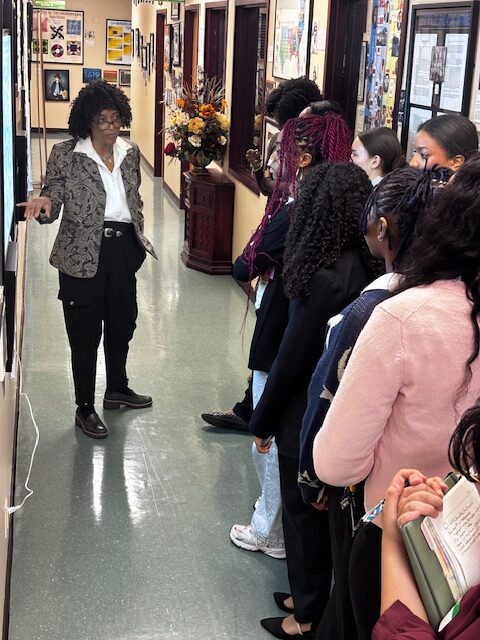
-

- shows interns gathered together in discussion, talking through ideas and sharing perspectives as they work through accessibility challenges that affect their communities.

-
- shows the full group working together reviewing their project ideas and discussing possible solutions that combine artificial intelligence with accessibility focused design.

